

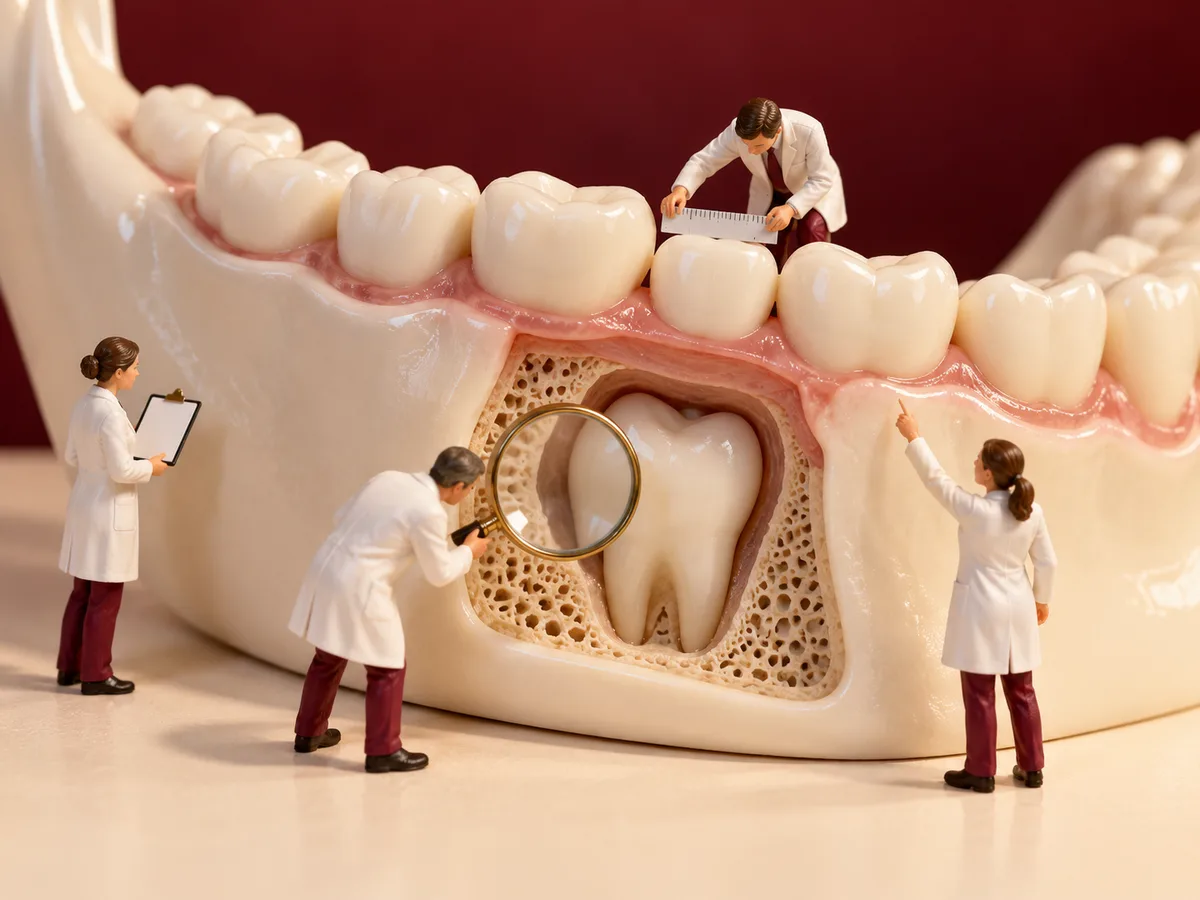
Short answer: the American Association of Orthodontists recommends a first orthodontic check-up by age 7, or sooner if you notice a problem. At 7 a child has a mix of baby and adult teeth, which makes developing problems easier to see. Few of them need treatment that early. Most children who need braces start somewhere between 9 and 16, and many are simply seen again as they grow.
Why age 7?
By 7, most children have lost a few baby teeth and their first adult teeth are coming in. The face and jaws are still growing. That combination gives an orthodontist a lot to go on: how the adult teeth are lining up, whether there will be room for the ones that haven't arrived yet, and whether the upper and lower jaws are growing at the same pace.
The American Association of Orthodontists (AAO) recommends a first check-up no later than age 7. You don't have to wait for that birthday, and you don't need a referral, if something already looks wrong to you.
What happens at a first orthodontic check-up
Most of the first visit is looking and talking. The orthodontist will usually:
- watch how the teeth meet when your child bites down
- check how much space there is for the adult teeth still under the gums
- see how the jaws move, and whether the bite slides to one side
- ask about thumb sucking, mouth breathing and similar habits
- take photos or an X-ray if they need to see teeth that haven't come through
You should leave knowing whether there is a problem, what it is, what can be done about it, and when (if ever) treatment should start.
Signs that your child should be checked sooner
Some unevenness is normal while teeth are changing. The AAO suggests seeing an orthodontist early, at any age, if you notice:
- baby teeth falling out very early or very late
- difficulty or pain when chewing or biting
- breathing through the mouth most of the time
- jaws that shift or click
- frequent biting of the inside of the cheek
- upper front teeth that stick out a lot, or a face that looks out of balance
Mention any thumb or finger sucking that carries on after the adult teeth start arriving. It can push teeth forward and change the shape of the bone around them.
Does a check at 7 mean braces at 7?
Usually it doesn't. According to the AAO, only a few orthodontic problems need correcting around age 7. Many children start treatment between 9 and 16, depending on how their teeth and jaws develop. If the orthodontist finds something early, the most common plan is to keep an eye on it and see your child again as more adult teeth come in.
That is a big part of why the early visit is useful. When the orthodontist knows what is coming, they can pick the right time to step in.
When early treatment can help
For a small group of children, starting some treatment before the teenage years makes sense. The best evidence is about upper front teeth that stick out a long way. Those teeth are more likely to be knocked or chipped in a fall or during play.
A 2018 Cochrane review brought together the trials on this question. Early treatment of prominent upper front teeth reduced new injuries to them, compared with waiting until the teens. In the trials that used functional appliances, about 19 in 100 children treated early had a new injury, against about 30 in 100 of those treated later. The review found no other clear benefit of starting early for this problem, and it rated the evidence as low to moderate quality. Whether to start early is something to talk through for each child.
An orthodontist may also step in early to help a child stop a sucking habit or an unusual swallowing pattern that is reshaping the bone, or to guide jaw growth in some children. If they suggest treating now, they should be able to tell you why that is better for your child than waiting.
What if my child is already older than 7?
Book the check anyway. The AAO says children of 8 and older still benefit, because some problems get harder to correct the longer they are left. The NHS notes that braces are often recommended once all the adult teeth have come through, so a check before then gives you time to plan, even if treatment starts later.
Questions to ask at the check-up
- Is there an orthodontic problem now, or one that is likely to develop?
- Does it need treatment now, or should we wait and watch? If we wait, when should we come back?
- If treatment is needed, what would it involve and roughly how long would it take?
- Is there a habit we should help our child stop?
- What should we look out for at home that means coming back sooner?
Children's orthodontic checks at MOC
At Mohammad Orthodontic Center on 18th November Street in Muscat, our specialist orthodontists plan children's orthodontic care, and your child can see any of our doctors for check-ups, fillings and prevention. So your child's teeth and bite can be followed in one place while the adult teeth come through.
At a first orthodontic check we look at your child's teeth and bite, explain what we see in plain words, and tell you whether anything needs doing now or whether we will just see your child again later. You can read about our treatments for children and adults. If you have a question before booking, send us a message on WhatsApp and our team will reply.